Abstract
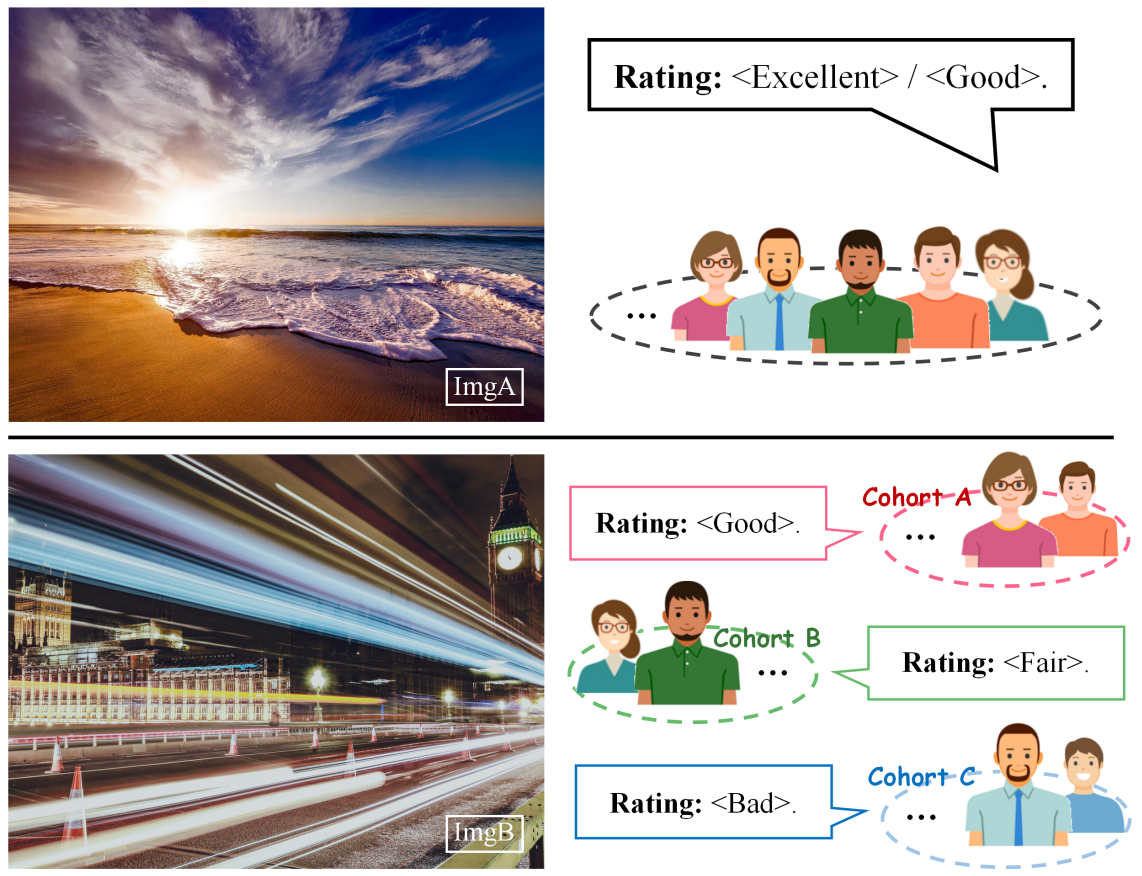
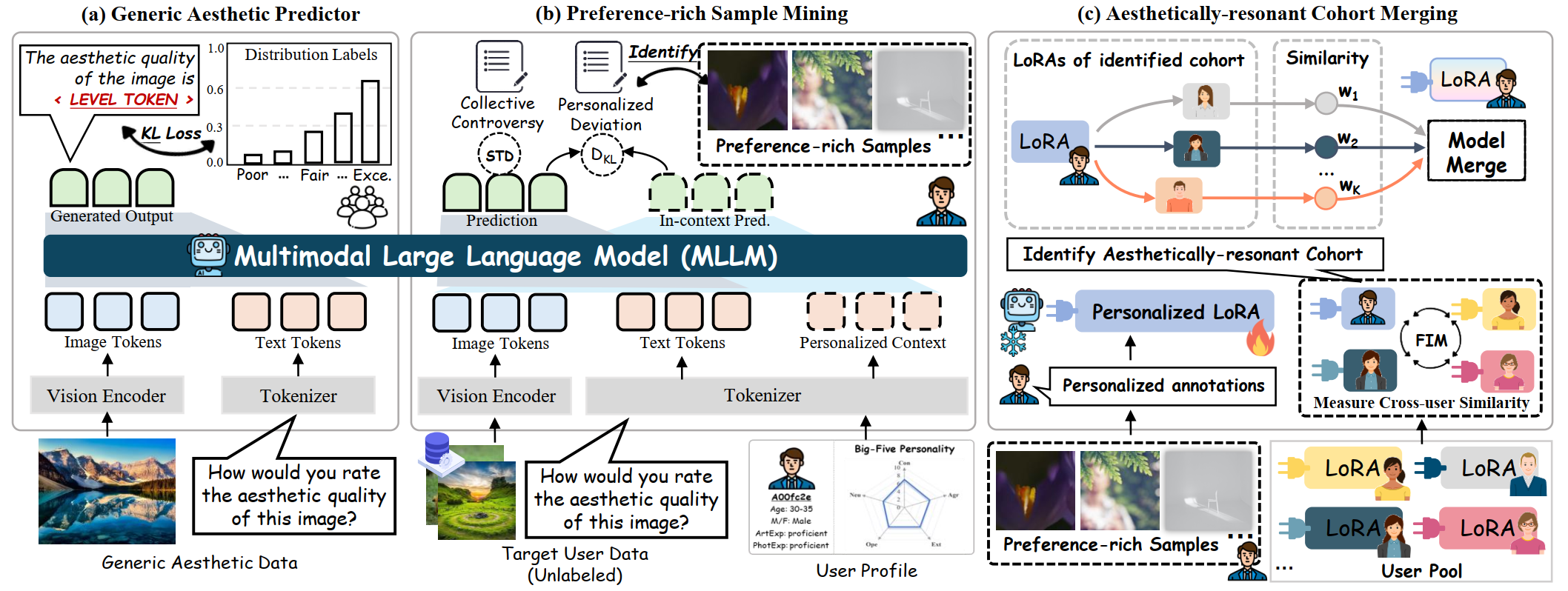
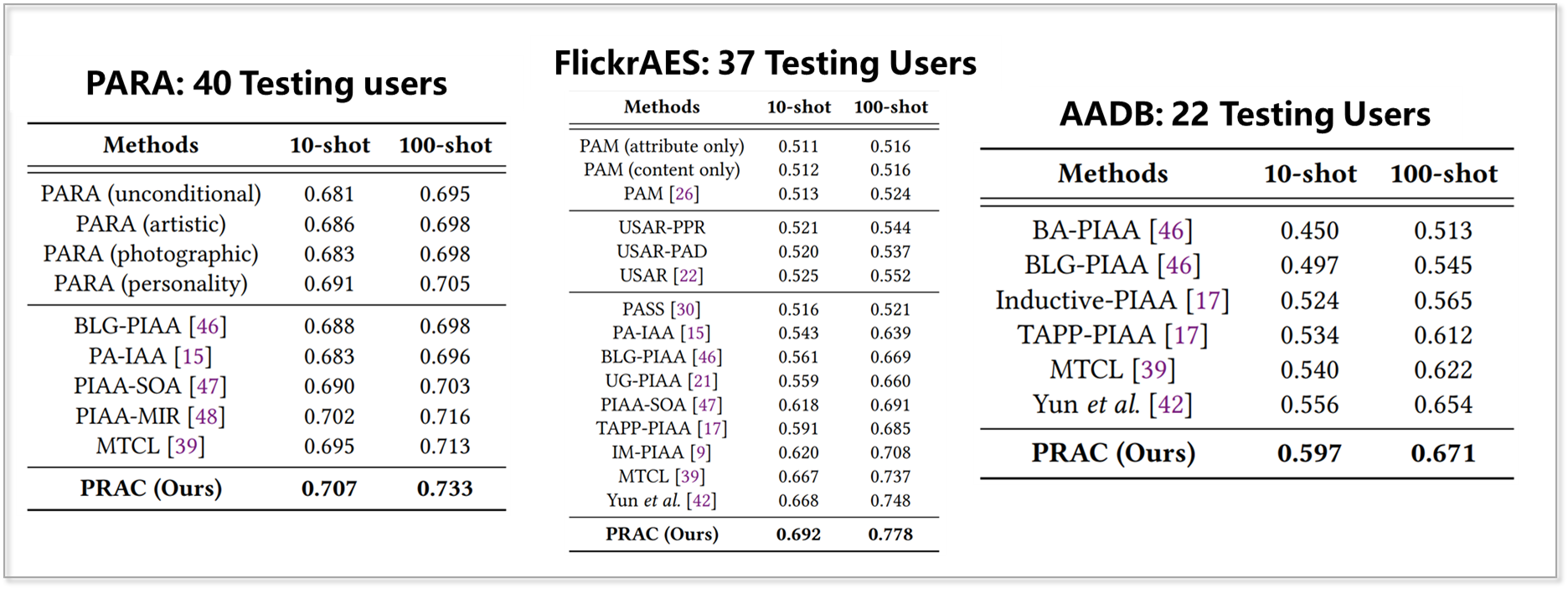
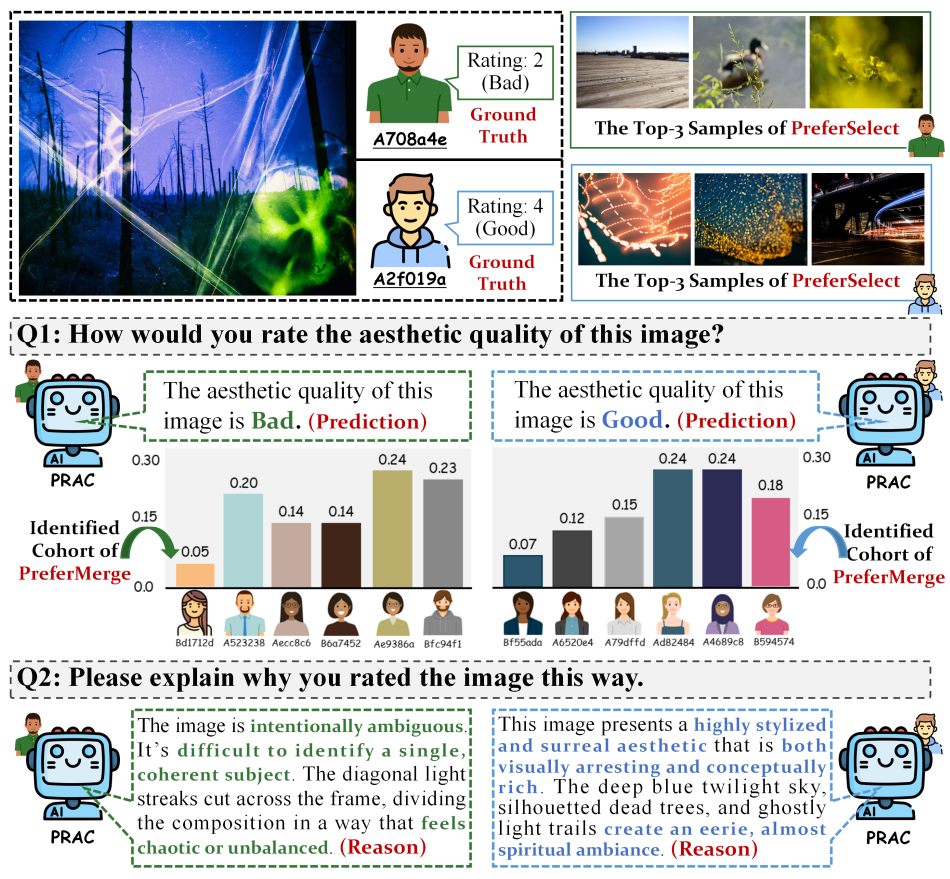
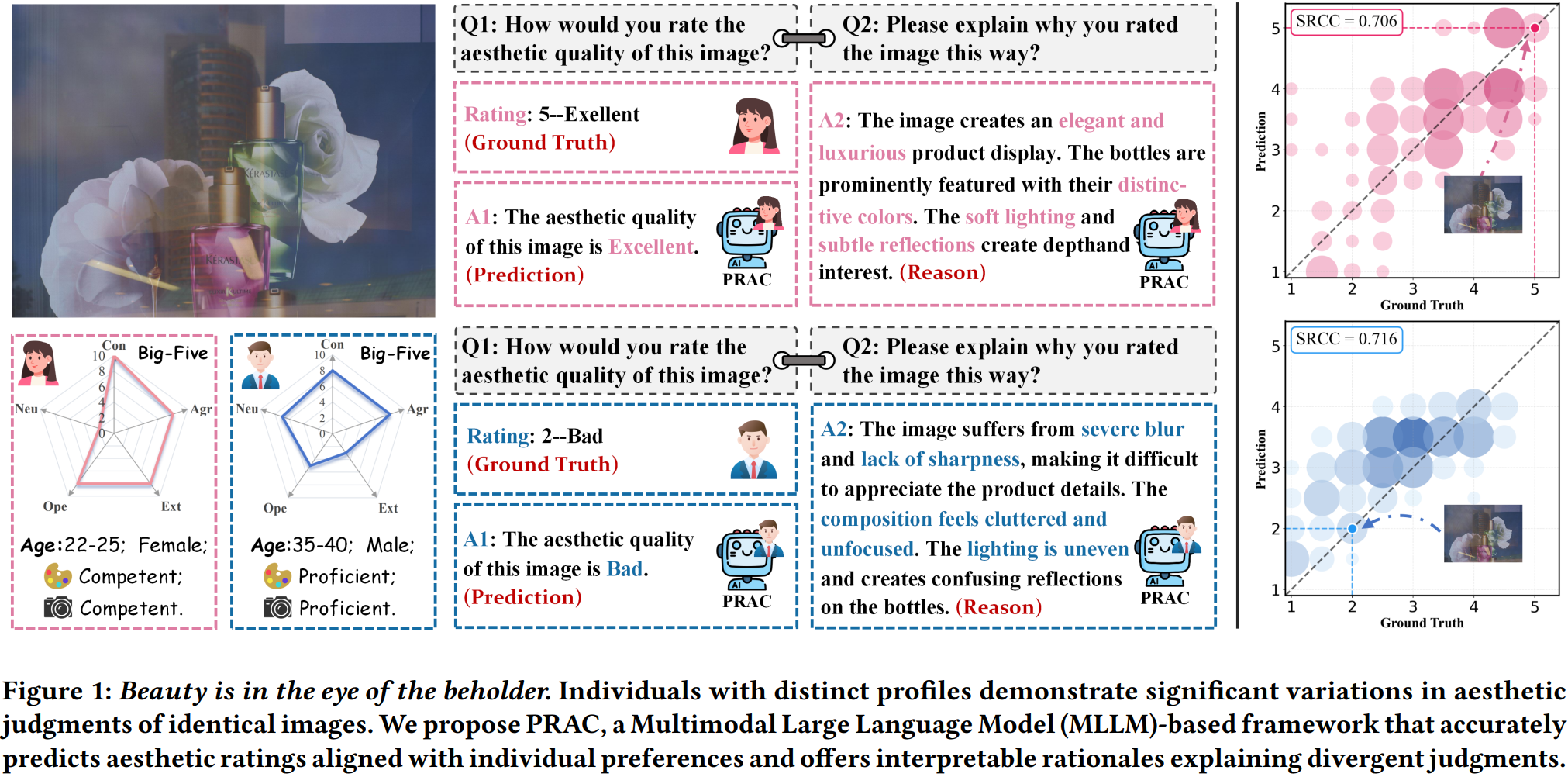
Personalized Image Aesthetic Assessment (PIAA) aims to predict aesthetic ratings of images that vary across individuals. The aesthetic preferences manifest to different extents across distinct visual stimuli and exhibit cohort-specific patterns. Motivated by the above fact, this paper presents a Multimodal Large Language Model (MLLM)-based approach, which models individual aesthetic preferences by Preference-Rich sample mining and Aesthetically-resonant Cohort merging (PRAC). Specifically, PRAC first identifies preference-rich samples by analyzing both Collective Controversy and Personalized Deviation of images, maximizing the utility of limited user data. Based upon the preference-rich samples, cross-user preference similarities are measured by comparing preference embeddings. Then, a cohort-based model merging strategy, is proposed by aggregating preference patterns from aesthetically-resonant users, which further enhances the personalization for the target individual. Extensive experiments and comparisons on four benchmark PIAA databases demonstrate the superiority of the proposed PRAC model over the state-of-the-arts.